
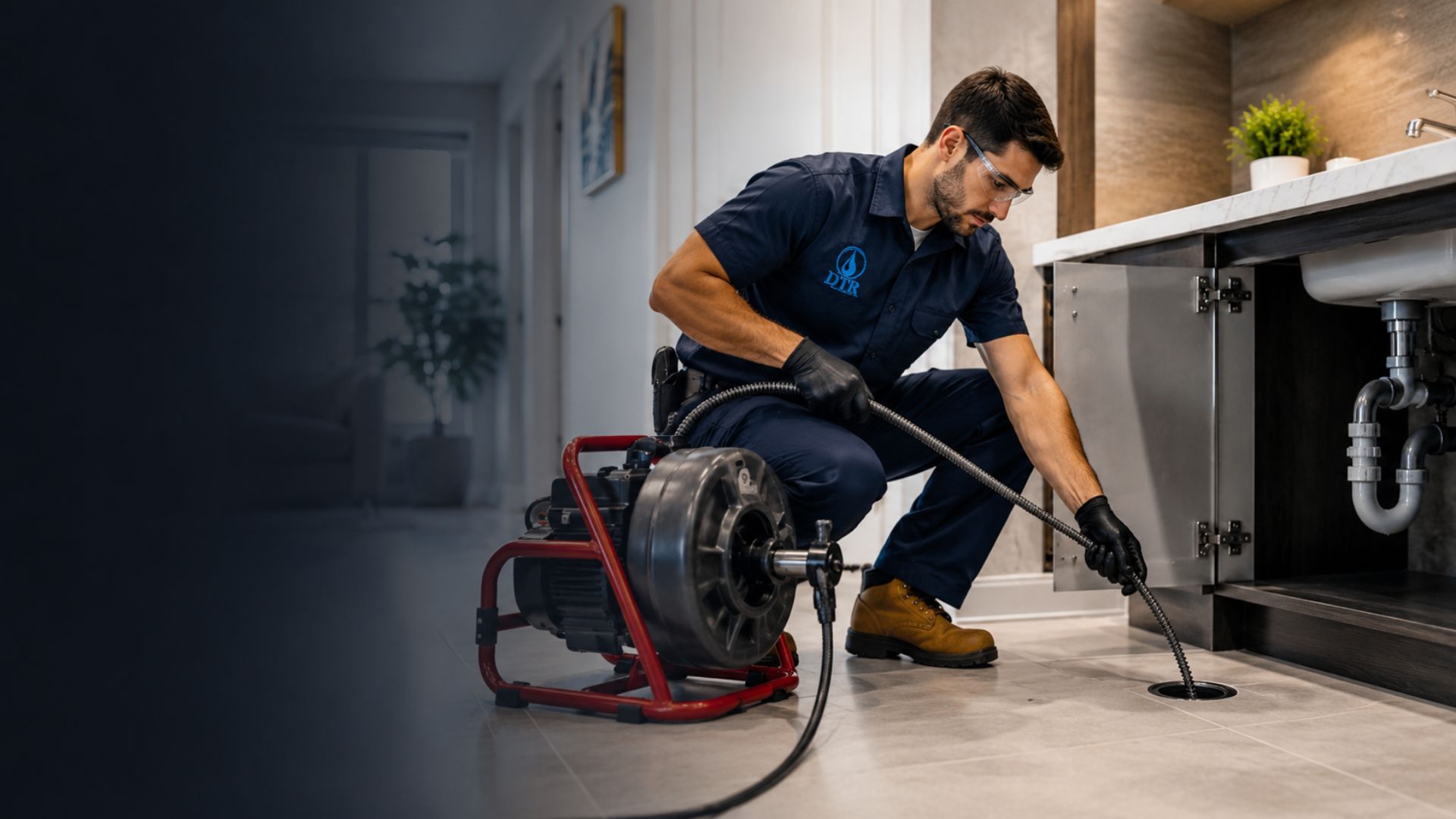
If you’ve plunged the same sink three times this month, the plunger isn’t the problem. When a recurring clogged drain keeps coming back, the real blockage usually never left, it just got pushed to one side. A cable can open a path through debris, but grease, sludge, roots, and scale left clinging to the pipe wall catch new debris fast, and the clog comes right back within weeks.
What’s Actually Behind a Drain That Keeps Clogging
One clog is a fluke. The same drain clogging again and again means something is still stuck in the line, quietly narrowing it every time you clear it. The usual suspects: grease and food residue hardening in kitchen lines, hair and soap scum building dense clogs in showers, wipes and “flushable” products that don’t break down like toilet paper, mineral scale narrowing older pipes, tree roots working into cracks and joints, or a sagging section of pipe that holds water and debris no matter how often you clean it.
When a Slow Drain Won’t Clear No Matter What You Try
- One sink or shower keeps backing up: usually a local buildup near that fixture
- Several drains slow down at once: a bigger issue further down the line
- Gurgling after a flush: a possible venting or main-line issue
- Water backing up into a tub, shower, or floor drain: a sewer main may be partially blocked
- Sewer odors near drains or in the yard: worth having someone look
- The drain clears after snaking, then clogs again within days: something’s still coating the pipe
If more than one fixture is acting up at the same time, treat it as a main drain cleaning issue instead of plunging every sink separately. Main-line clogs tend to escalate, especially if water use keeps going.
Why We Run a Camera Before We Guess
Chemical drain cleaners rarely reach the actual blockage, and they’re hard on older pipes. A cable can get water moving again, but it can’t show you what’s really going on inside the line. Our crew runs an HD camera first on anything recurring, so we know whether we’re dealing with buildup, roots, or a pipe that’s cracked or sagging, before we recommend anything.
A lot of companies will snake a drain, collect the fee, and move on to the next call. We’d rather find out why it keeps clogging, so you’re not paying to clear the same drain every few months.
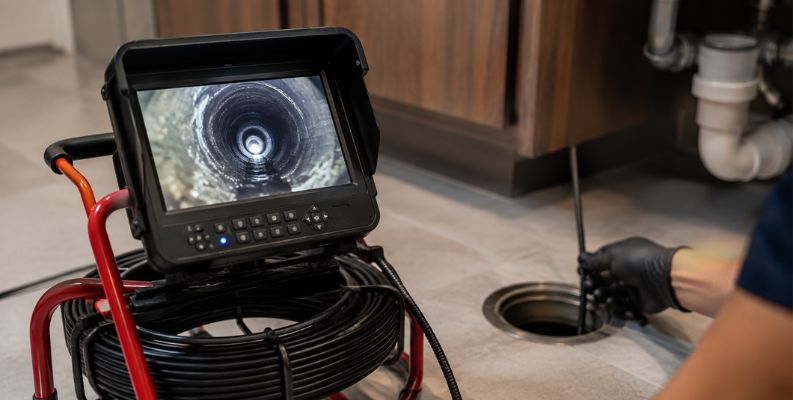
The Right Fix Depends on What’s Actually Wrong
- Drain snaking clears a straightforward, localized clog fast.
- Hydro jetting scours the full pipe wall clean when grease, scale, or roots are the real cause.
- Sewer line repair or replacement comes in when the camera shows a cracked, collapsed, or sagging pipe that cleaning alone can’t fix.
Call for Drain Cleaning in Nassau County If
- The same drain clogs twice in a short window
- Multiple drains slow down together
- You hear gurgling after flushing or running water
- You’ve already tried plunging or snaking with only short-term results
- Your property has mature trees or older sewer piping
A recurring clog is a warning, not a coincidence. Waiting it out can turn a routine drain cleaning into a full backup. A few habits help in between visits: keep grease out of the kitchen sink, use strainers to catch hair and food scraps, and only flush toilet paper. Habits can’t fix a damaged line though, so if a slow drain won’t clear despite doing everything right, it’s time for a camera to settle it.
What It Actually Costs to Keep Ignoring It
A drain that clears itself out every few months feels like a minor annoyance, so it’s easy to keep pushing it down the priority list. But every repeat visit is money spent on the same symptom, not the cause. A recurring clog rooted in tree roots or a sagging pipe doesn’t stay mild forever either, it worsens quietly until a routine slow drain turns into a backup that reaches your floor. At that point you’re not just paying for drain cleaning, you’re covering water damage cleanup and possibly flooring or drywall repair on top of the sewer work. Catching it early with a camera, rather than another round of snaking, is almost always the cheaper path.
Can I Just Use a Store-Bought Drain Cleaner?
It’s tempting, and for a genuinely minor clog it might buy you a few days. But chemical cleaners dissolve what they touch on contact, they never reach buildup further down the line, and repeated use can damage older pipe materials over time. If a chemical cleaner worked and the drain backs up again a month later, that tells you something real: the clog wasn’t a one-time event, and it’s worth having someone look rather than reaching for a second bottle.
Nassau & Suffolk County Homes and Older Pipes
A lot of the homes we service across Nassau and Suffolk County have piping that’s decades old, and older clay or cast iron lines are more prone to cracking, shifting, and letting roots in through the joints. If your home was built before the 1980s and you’re dealing with a drain that keeps clogging, age of the piping is worth ruling out early rather than assuming it’s just a one-off buildup issue every time.
We’re not chasing every zip code on Long Island. Nassau and Suffolk County are the focus, and that means our crew knows the difference between a typical newer-build clog and what a home with 1960s clay piping is really dealing with.
Signs your drain needs more than snaking
- Same Fixture Clogs Again Within Weeks
- Multiple Drains Slowing at Once
- Gurgling After a Flush
- Sewer Odor Near a Drain
- Clog Returns Days After Cleaning
A cable or snake often just opens a path through the blockage rather than removing everything coating the pipe. If grease, scale, or roots are left behind, they catch new debris fast and the clog comes back.
If only one fixture is slow, it's usually local to that branch. If your shower, toilet, and sink are all acting up around the same time, the issue is likely in the shared main line, not any single drain.
It depends on your specific policy and whether the issue is considered maintenance or a covered failure. We're happy to provide documentation from our inspection if you need it for a claim.