
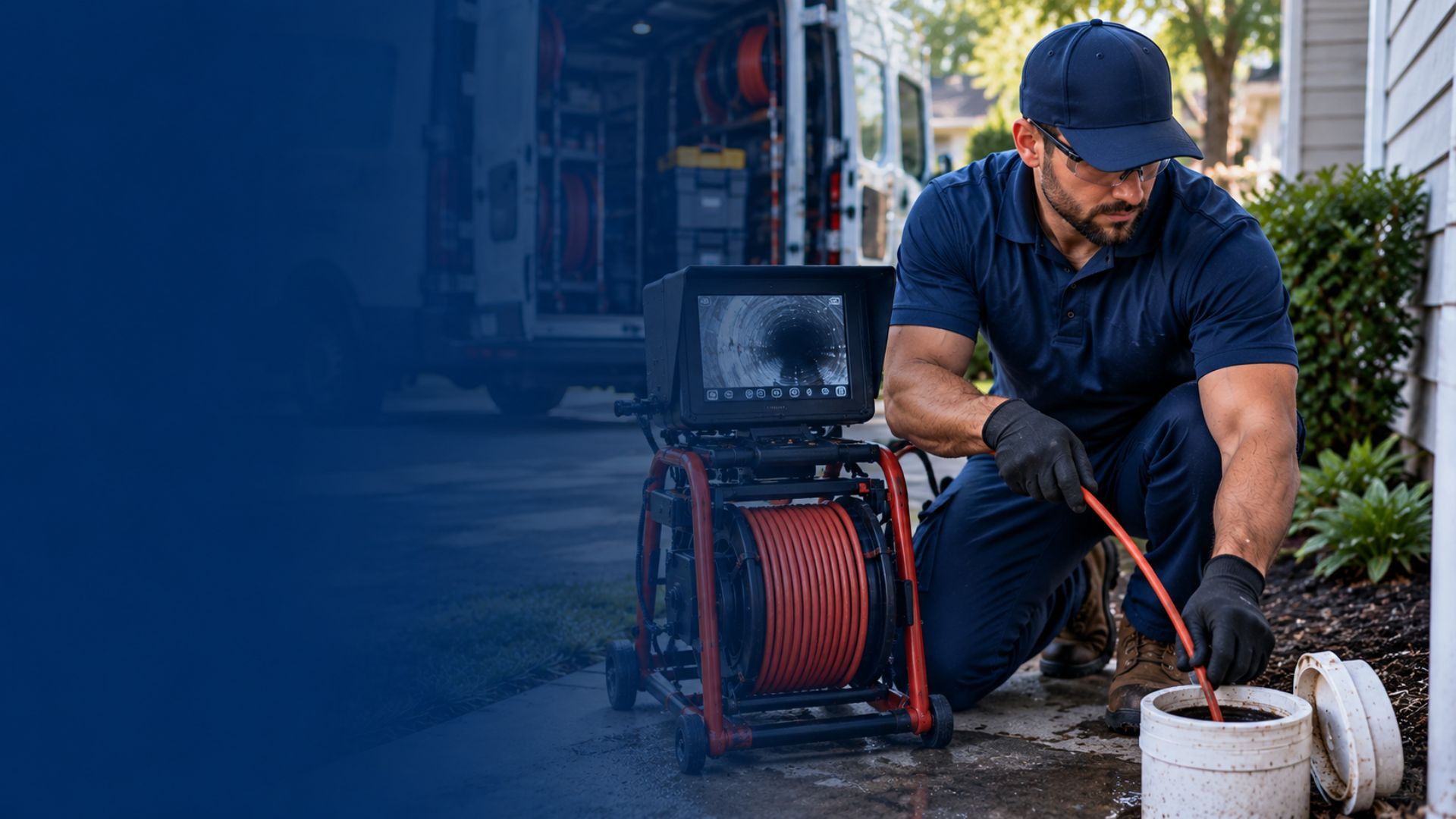
The most common signs of a broken sewer line include multiple slow drains, sewer odors, gurgling toilets, sewage backups, wet areas in the yard, unusually green grass, and recurring drain clogs. If these warning signs are ignored, a damaged sewer line can lead to messy backups, property damage, and a more extensive repair.
For Long Island homeowners, quick diagnosis matters. Doodyman To The Rescue provides HD sewer camera inspections, drain cleaning, hydro jetting, excavation, and sewer line repair throughout Nassau and Suffolk County. Our team can locate cracks, root intrusion, blockages, and other underground pipe problems without starting with unnecessary digging.
1. Multiple Drains Are Slow or Clogged
One slow sink may be a simple fixture-level clog. But when several drains drain slowly at the same time—such as a kitchen sink, shower, toilet, and bathroom sink—the problem may be in the main sewer line.
This is one of the earliest signs of a broken sewer line because wastewater from multiple fixtures must travel through the same larger pipe before leaving your property. When that line has a crack, root intrusion, heavy buildup, or partial collapse, water cannot move freely.
Watch for these patterns:
- Your shower, tub, sink, and toilet are all slow
- A plunger helps briefly, but the clog keeps returning
- Lower-level fixtures are affected first
- The problem worsens after laundry, showers, or running the dishwasher
If several fixtures are slow at once, avoid treating each drain as a separate problem. A professional camera inspection can determine whether the issue is a blockage or damage deeper in the sewer line.
2. Toilets or Drains Make Gurgling Sounds
Gurgling is more than an annoying plumbing noise. It can mean air is trapped in the sewer line because wastewater is struggling to move past a restriction.
You may hear a toilet bubble after flushing, or hear a shower drain gurgle when someone uses a sink or washing machine. These sounds can be caused by a partial obstruction, tree roots, pipe damage, or a main sewer line blockage.
A damaged pipe may allow soil, roots, or debris to interfere with wastewater flow. As the blockage worsens, the gurgling may become more frequent and may eventually be followed by a backup.
3. Sewage Backs Up Into a Tub, Shower, or Floor Drain
A sewage backup is one of the most urgent cracked sewer pipe symptoms. It often appears in the lowest fixture in the home, such as a basement floor drain, first-floor shower, bathtub, or laundry drain.
For example, flushing an upstairs toilet may force wastewater into the downstairs tub if the main sewer line is blocked or severely restricted. This is not a normal drain clog—it may indicate a failure in the pipe that carries wastewater away from the house.
Stop using water if you notice sewage coming back through a fixture. Avoid flushing toilets, taking showers, doing laundry, or running dishwashers until the line is inspected. Continued water use can make the backup worse and increase cleanup needs.
4. Sewer Odors Inside or Outside Your Home
A healthy sewer system should keep sewer gases contained and direct wastewater safely away from your home. If you smell sewage indoors, near drains, in the basement, or around your yard, the sewer line may be blocked, cracked, or leaking.
A strong sewage odor in the yard can be especially concerning. It may indicate that wastewater is escaping from a cracked sewer pipe into the surrounding soil. Sewer odors inside the home can also occur when a blockage forces gases back through drains.
Do not dismiss recurring odors as a temporary issue. A professional inspection can locate the source and show whether the line needs cleaning, repair, or replacement.
5. Your Yard Has Soggy Spots, Sinkholes, or Unusually Green Grass
One of the most visible signs of a broken sewer line can appear outside. A leaking underground pipe can saturate soil along the route of the sewer line, creating wet patches, soft ground, depressions, or small sinkholes.
You may also notice an unusually lush strip of grass. Wastewater can act as fertilizer, making grass above a leaking line look greener or grow faster than the surrounding lawn.
Look for:
- Wet or muddy areas that do not dry out
- A patch of grass that is greener than the rest of the yard
- Soft or sunken soil near the sewer-line path
- New cracks near walkways, patios, or foundations
- Sewer smells near an outdoor wet spot
These symptoms do not confirm pipe damage on their own, but they are strong reasons to schedule a sewer camera inspection promptly.
6. The Same Drains Keep Clogging
Recurring clogs are often a sign that the blockage has not truly been removed—or that the pipe itself is damaged. Tree roots can enter tiny gaps in aging sewer pipes, then expand and trap toilet paper, grease, wipes, and debris.
A basic drain snake may punch through a root mass or buildup and restore flow for a short time. But unless the roots, buildup, and damaged section are properly addressed, the same sewer problem may come back.
Homeowners should be especially alert when:
- The same toilet, tub, or floor drain backs up repeatedly
- Professional drain cleaning provides only short-lived relief
- The issue returns every few weeks or months
- The property has mature trees near the sewer route
- Your home has older underground plumbing
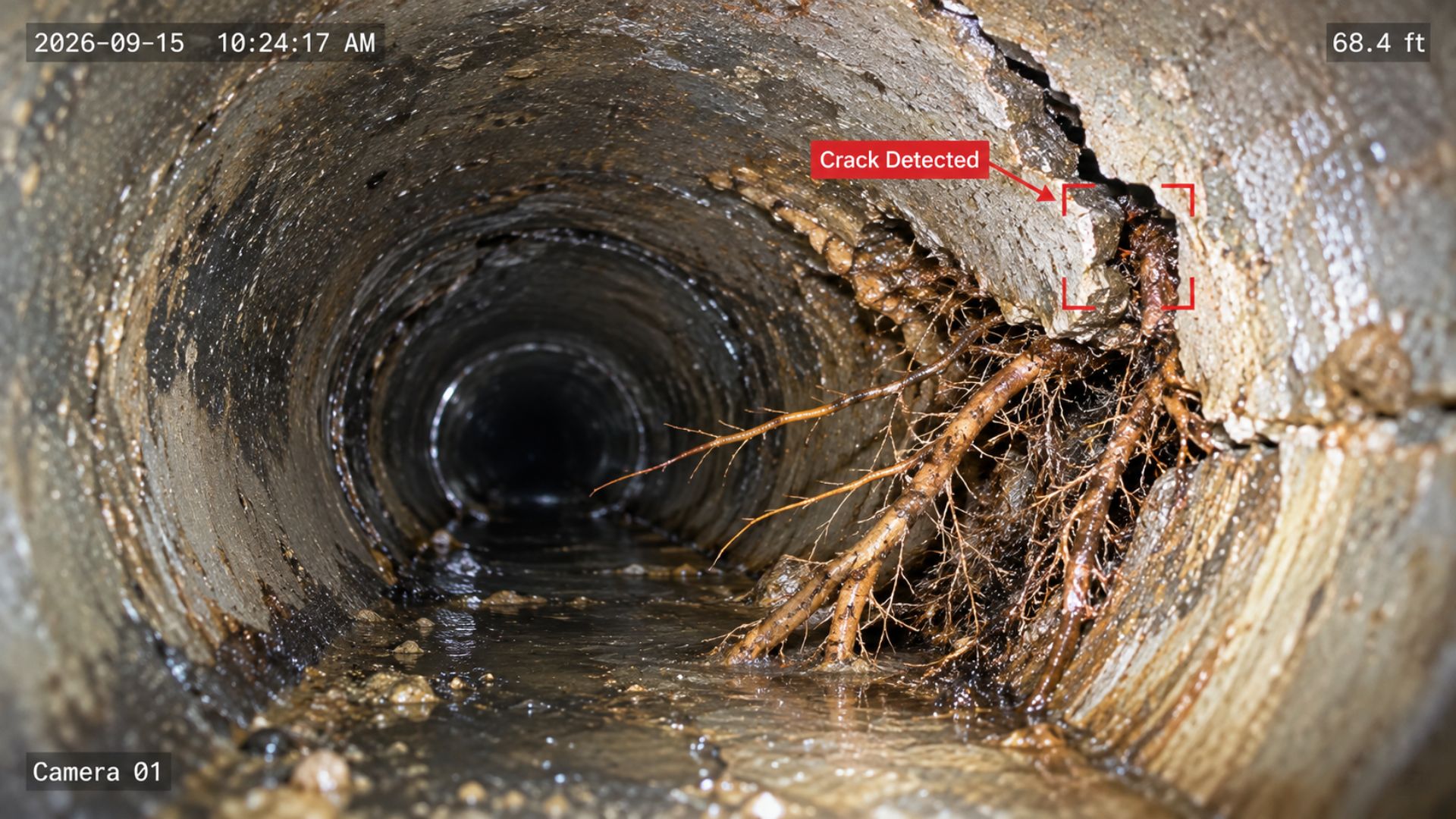
Tree-root intrusion is a common source of recurring sewer trouble, and a camera inspection can show the exact location and severity of roots, cracks, offsets, or collapsed pipe sections.
7. Your Water Bill Increases Without Explanation
An unexplained water bill may not always point to a sewer problem, since sewer lines typically carry wastewater away from the home rather than supply fresh water. However, a damaged water main, plumbing leak, or abnormal water use can sometimes occur alongside underground line issues.
If you have a higher bill plus slow drains, sewer odors, soggy ground, or frequent backups, do not assume the cause is simple. A qualified plumbing and sewer professional can inspect the situation and determine whether you are dealing with a sewer line issue, water main leak, or another plumbing problem.
How to Tell If a Sewer Line Is Damaged
The most reliable answer to how to tell if a sewer line is damaged is a professional sewer camera inspection. A technician feeds a waterproof HD camera through an access point in the plumbing system to inspect the inside of the line.
This approach can identify: cracks and breaks, tree root intrusion, grease, scale, or debris buildup, misaligned or separated pipe joints, bellies where a low section of pipe collects waste and water, collapsed or deteriorated pipe sections, and the exact location of the issue.
A camera inspection helps avoid guesswork. Instead of excavating based on symptoms alone, the technician can see what is happening inside the pipe and recommend the right next step. Doodyman To The Rescue uses HD camera inspections to pinpoint sewer-line cracks, roots, and blockages without digging for the initial diagnosis.
What Causes Sewer Lines to Break?
Sewer pipes can fail for many reasons, particularly as they age. The right solution depends on the cause and the condition of the existing line.
| Cause | How it damages the sewer line |
|---|---|
| Tree roots | Roots enter cracks or joints, grow inside the pipe, and obstruct wastewater flow |
| Aging pipes | Older materials can corrode, crack, shift, or deteriorate over time |
| Ground movement | Soil settlement, freezing and thawing, or construction activity can shift pipe sections |
| Heavy buildup | Grease, wipes, scale, and debris can create severe restrictions and increase stress on weak pipes |
| Improper installation | Poor slope, weak connections, or improperly supported sections can lead to recurring failures |
| Pipe collapse | Severe deterioration or external pressure can cause a pipe section to collapse or lose proper alignment |
A recurring blockage does not automatically mean replacement is necessary. In some cases, professional cleaning or hydro jetting can restore proper flow. If the pipe is cracked, collapsed, separated, or repeatedly infiltrated by roots, a targeted repair or replacement may be the more dependable long-term option.
Broken Sewer Pipe Repair: What Are the Options?
The right broken sewer pipe repair method depends on the inspection findings. A qualified sewer contractor should explain the condition of the pipe, the location of the problem, available options, and the expected scope of work before repairs begin.
Professional Drain Cleaning — For a blockage caused by grease, debris, paper products, or other buildup, mechanical drain cleaning may be enough to restore flow. This is often appropriate when the pipe itself is structurally sound.
Hydro Jetting — Hydro jetting uses high-pressure water to clear heavy grease, scale, sludge, and debris from the pipe walls. It is a more thorough cleaning option for many recurring sewer and drain clogs, provided the pipe is inspected first and is suitable for the service.
Root Removal — When roots are found inside the line, they may need to be mechanically cut and cleared. Because roots often return when a pipe has cracks or gaps, cleaning alone may not be a permanent solution if the line remains damaged.
Spot Sewer Repair — If the camera reveals a localized crack, break, or failed joint, a targeted repair may correct the issue without replacing the entire sewer line.
Sewer Line Replacement — For widespread damage, a collapsed pipe, recurring root intrusion, or a severely deteriorated line, replacement may offer the most reliable long-term outcome. Doodyman To The Rescue performs both spot repairs and full sewer line replacements for homes and businesses across Long Island.
When Should You Call for Sewer Line Repair in Long Island?
Call for professional sewer line repair as soon as you notice sewage backups, multiple slow drains, persistent sewer odors, gurgling toilets, wet areas in the yard, or recurring clogs that do not stay fixed.
- Raw sewage is backing up into your home
- Water is pooling around your foundation or in your yard
- A drain problem affects multiple fixtures
- You suspect a collapsed or broken underground pipe
- You smell sewer gas inside your home
- You have tried drain cleaning, but the issue keeps returning
Doodyman To The Rescue is a licensed, insured, and bonded sewer and drain specialist serving Nassau and Suffolk County. Based in Rockville Centre, the company provides same-day emergency response, sewer camera inspections, hydro jetting, sewer line repair, replacement, and emergency excavation.
The signs of a broken sewer line often start small — a slow drain, a gurgling toilet, or a clog that seems to come back too often.
Protect Your Home Before the Problem Gets Worse
The signs of a broken sewer line often start small: a slow drain, a gurgling toilet, or a clog that seems to come back too often. Left untreated, those early warnings can progress into indoor sewage backups, damaged landscaping, and a more complicated repair.
If you notice one or more signs of a broken sewer line, contact Doodyman To The Rescue at (516) 354-8336. Our Long Island sewer specialists can inspect your line, identify the problem, and recommend a clear path to repair.
We serve homeowners and property managers throughout Nassau and Suffolk County, including Rockville Centre, Freeport, Valley Stream, Hempstead, Garden City, Uniondale, Farmingdale, and surrounding Long Island communities. Doodyman offers emergency service, sewer camera inspections, drain cleaning, hydro jetting, sewer line repair, and water-main solutions.
Call Doodyman To The Rescue at (516) 354-8336 or request an assessment to schedule a sewer line inspection or repair in Long Island.